
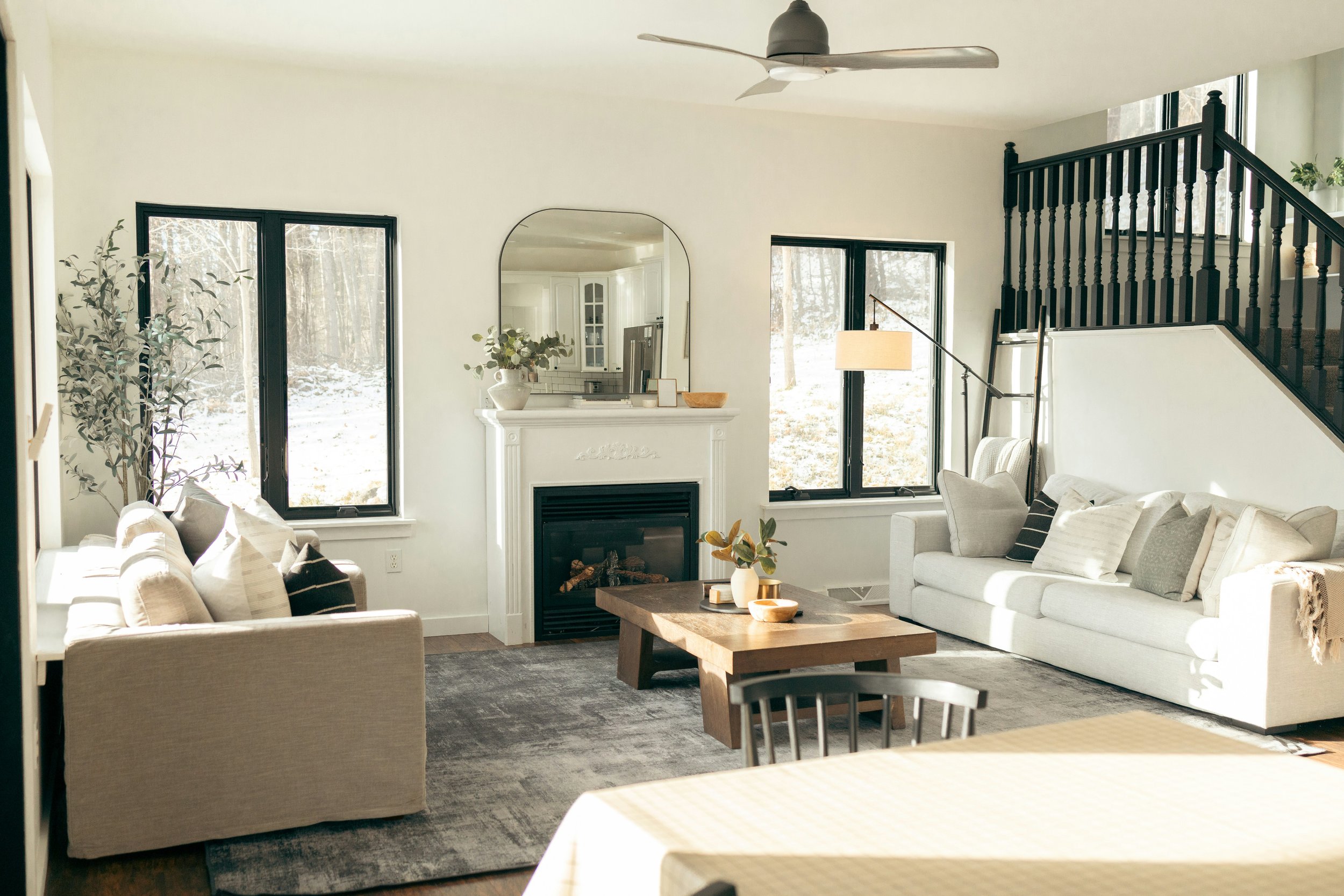
Price matters, but performance matters more. This is how smart buyers evaluate whether a home will age well financially and functionally.
Estimated read time: 4 minutes
Most buyers are trained to think about value as a moment. The price they pay. The deal they negotiate. The list-to-sale comparison. All of that matters, but none of it is where long-term outcomes are decided.
Long-term value is created by how a home performs after you buy it. How easily it resells. How expensive it is to maintain. How many future buyers it fits. How well it adapts as your life changes. Those factors quietly determine whether ownership compounds in your favor or slowly erodes the benefit of the original purchase.
This post breaks down the real drivers of long-term home value so buyers can evaluate properties beyond surface appeal and short-term wins.
Location is not a cliché. It is an operating system.
Location shapes nearly every long-term outcome tied to a home. Not just because of prestige or perception, but because location controls access, zoning, school patterns, commute behavior, and future development paths. Those elements dictate who will want the home later and how easily demand replenishes.
Strong locations usually share a few characteristics. They sit near employment corridors or stable job centers. They offer multiple commute routes instead of a single dependency. They maintain consistent residential identity even as surrounding areas evolve. They attract both first-time buyers and second-time buyers, which keeps demand wide instead of narrow.
Homes in these areas tend to recover faster after slowdowns, hold attention longer when inventory rises, and experience less extreme pricing swings. That stability is not exciting in the short term, but it is powerful over a decade.
Layout determines how long a home stays relevant
Square footage does not create value on its own. Usefulness does.
Layouts that age well usually support a wide range of lifestyles. Bedrooms that are not isolated in impractical ways. Kitchens that connect naturally to living areas. Storage that exists where people actually live. Flexible rooms that can shift between office, guest space, or family space without structural change.
Homes lose relevance when their layout only fits one narrow lifestyle. When bedrooms are too small. When circulation is awkward. When additions feel forced. When primary spaces lack natural light. These homes can still sell, but they rely more heavily on price concessions and cosmetic reinvention to stay competitive.
Functional layouts protect value by reducing the need for future buyers to mentally remodel the house just to imagine living in it.
Maintenance history is an invisible asset
Two identical houses on paper can perform very differently in the market based on how they were treated.
Homes with consistent maintenance histories cost less to own and create fewer inflection points where large, sudden capital is required. Roofs replaced on schedule. HVAC serviced regularly. Drainage corrected early. These patterns reduce the chance of compound failures and protect future resale narratives.
Deferred maintenance rarely shows up fully in listing photos. It shows up later in inspections, negotiations, insurance premiums, and buyer hesitation. That hesitation translates into longer market time and softer pricing.
When evaluating long-term value, how a home has been cared for is often more predictive than how recently it was renovated.
Neighborhood trajectory matters more than neighborhood hype
Some areas appreciate because they are fashionable. Others appreciate because they function.
Long-term value tends to concentrate where infrastructure improves steadily, not dramatically. Where retail fills in logically. Where schools stabilize. Where municipal investment is consistent. Where owner-occupancy remains meaningful.
These neighborhoods rarely make headlines. They become stronger quietly.
Homes in these areas benefit from a compounding effect. Improvements attract residents. Residents attract services. Services stabilize demand. Stabilized demand supports pricing. Over time, the area becomes less speculative and more foundational.
Speculative growth can create sharp gains, but it also introduces volatility. Long-term value is usually created where people actually want to live, not just invest.
Payment efficiency protects optionality
A home’s purchase price is fixed. Its operating cost is not.
Taxes, insurance, utilities, and maintenance shape monthly ownership experience. Homes that offer payment efficiency relative to their peers tend to outperform over time because they fit more buyers’ budgets as conditions change.
Efficiency can come from lot size, construction quality, energy performance, tax positioning, or association structure. These elements are rarely exciting, but they quietly determine how many future buyers can realistically afford the home.
The more buyers who can afford a property, the more resilient its resale profile becomes.
Broad buyer appeal is a form of insurance
Homes that appeal to many types of buyers tend to be easier to sell and easier to finance.
Appeal does not mean neutral. It means accessible.
Properties that limit their audience through extreme layouts, hyper-specific design, or functional compromises often rely on finding the “right” buyer. When markets are fast, this is invisible. When markets slow, it becomes expensive.
Homes that work for families, couples, downsizers, and remote workers simultaneously hold larger buyer pools. That breadth stabilizes demand and reduces dependence on any one segment of the market.
Renovations create value when they solve problems, not when they chase trends
Renovations that age well typically improve function, efficiency, and durability. Roofs. Windows. Kitchens that improve flow. Bathrooms that improve usability. Mechanical systems. Drainage and structural improvements.
Renovations that age poorly often emphasize style without solving underlying constraints. They photograph well, but they do not reduce ownership friction.
Long-term value grows when capital improvements decrease future costs, increase future adaptability, or expand future buyer appeal.
Final Thought
Long-term value is not something you negotiate at the closing table. It is something you design into the purchase.
It lives in where the home sits, how it functions, how it has been maintained, how easily it fits future buyers, and how sustainable it is to own.
When those elements align, appreciation becomes a byproduct, not a requirement.
If you want help evaluating properties through a long-term performance lens rather than short-term excitement, we built something to support that approach.
Join the Bluebonnet Mailing List
If you are thinking about buying in the next 6 to 12 months, the best advantage you can have is steady guidance without constant noise. Our mailing list shares monthly real estate insights designed to help Texans understand value, timing, and decision-making before they ever write an offer.
Sign up below to receive the next issue.
About Bluebonnet Real Estate
Bluebonnet Real Estate, proudly affiliated with Keller Williams Realty, helps Texans navigate homeownership with clear guidance, local market insight, and practical strategy built around long-term value.